Puzzle Games
Puzzle Games on Rolling Sky
Our puzzle shelf is the quiet corner of Rolling Sky. No countdown clocks, no neon sirens, no retry-or-die prompts — just a page of logic, pattern and spatial-reasoning titles that reward thinking over twitching. If the arcade hub is where your reflexes live, this is where your brain comes to breathe.
Three puzzle flavours we curate
We sort every puzzle into one of three families. Spatial puzzles test how you rotate, pack and slot shapes in 2D or 3D. Logic puzzles rely on deduction — colour chains, Sudoku variants, cause-and-effect contraptions. Lateral puzzles reward reading between the lines, with trick questions and visual misdirection as the main mechanic. All three show up on this page, so there’s always something for the mood you’re in.
Hand-picked brain teasers
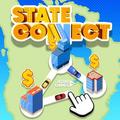
State Connect — a geography puzzle that doubles as a map-knowledge drill.
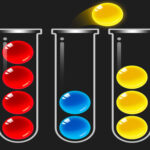
Ball Sort 2D — the colour-sort classic, with hundreds of hand-tuned levels.
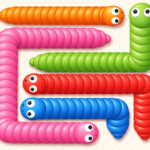
Twisted Snakes Brain Puzzle — spatial routing with escalating serpent counts.
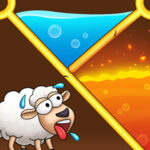
Pin Puzzle Save The Sheep — pull-the-pin physics with a cute rescue hook.
Rope Puzzle — knot untangling that teaches basic graph theory without saying so.
Playing smarter, not faster
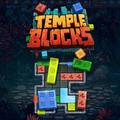
Most puzzle games don’t need speed — they need discipline. Our strongest advice to leaderboard climbers is to resist the first move your eye suggests. Count moves, visualise the end state and then execute. In Temple Blocks, for example, the three-star solve nearly always costs one or two more clicks than the obvious path, because the perfect route takes an early detour. In Cube Rush 3D, the player who scores highest is almost always the one who paused mid-run.
Pair this shelf with the rhythm or racing categories for a balanced browsing diet: puzzles work the prefrontal cortex, arcade titles work reaction time, and alternating keeps both sharp.
Difficulty beyond the star rating
Most puzzle games display a one-to-three star difficulty estimate, but true challenge rarely matches the badge. A level with few moves and a tight constraint can feel easy on paper and brutal in practice. We recommend ignoring stars entirely for the first ten levels of any new puzzle title and instead measuring your personal friction, meaning how often you reset, how long you stare before each move and how satisfied the solve feels. That self-reported scale predicts your learning rate far better than any marketing badge, and it travels across titles, so you can line up your next pick against the one you just finished without any guesswork.